

Как выбрать правильный шаг пикселя для светодиодного дисплея стадиона
Выбор правильного шага пикселя для светодиодный дисплей для стадиона является важным финансовым и инженерным решением. Операторы стадиона, архитекторы спортивных объектов, и менеджеры по коммерческим закупкам должны сбалансировать качество изображения, расстояние просмотра, условия на открытом воздухе, и бюджет проекта.
Выбор слишком большого шага пикселя может привести к тому, что повторы игры будут казаться пиксельными для зрителей, сидящих рядом.. Однако, Выбор неоправданно малого шага пикселя для большого открытого стадиона может значительно увеличить затраты на оборудование, не обеспечивая при этом видимой выгоды для болельщиков, сидящих дальше.
Как доверенное лицо производитель дисплеев для стадионов, TOPLED помогает покупателям помещений сопоставлять характеристики светодиодных экранов с расстоянием просмотра, условия места проведения, требуемая яркость, защита от непогоды, и бюджет.
This guide explains how to select the right pixel pitch for indoor basketball courts, outdoor football stadiums, and multipurpose arenas. It also compares the main engineering factors that B2B buyers should consider before placing a stadium LED display order.
What Is Pixel Pitch in a Stadium LED Display?
Pixel pitch refers to the distance from the center of one LED to the center of the adjacent LED. It is measured in millimeters and commonly expressed as P2.5, П.4, P6, P8, or P10.
The pixel pitch directly affects pixel density, image resolution, and recommended viewing distance. Smaller pixel pitches place LEDs closer together. This creates higher pixel density and allows viewers to see detailed images from shorter distances.
Larger pixel pitches place LEDs farther apart. They provide lower pixel density but can deliver effective large-scale images when spectators are positioned farther from the screen.
Pixel Pitch vs. Расстояние просмотра
| Шаг пикселя | Recommended Viewing Distance | Typical Venue Application |
|---|---|---|
| P2.5–P4 | 3 m–10 m | Indoor basketball courts and perimeter boards |
| P6–P10 | 15 m–100 m+ | Outdoor football stadiums and large video walls |
По этой причине, pixel pitch should never be selected independently from viewing distance. The correct combination helps stadium operators achieve clear live broadcasts, Многоугольные повторы, score displays, and sponsor advertising without unnecessary capital expenditure.
Why Viewing Distance Matters When Choosing Pixel Pitch
The primary factor in stadium LED display selection is the distance between spectators and the screen.
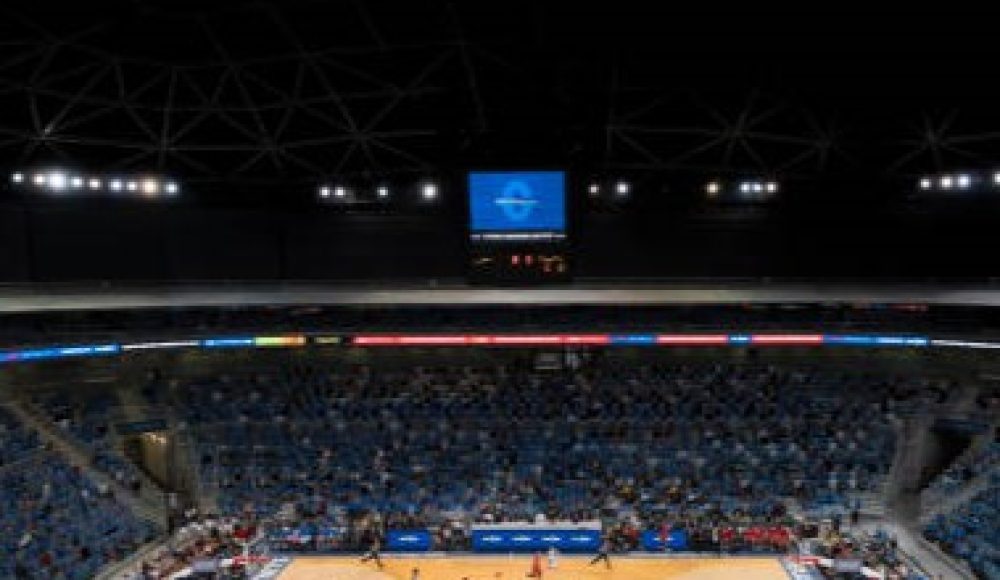
Indoor sports venues generally have a compact layout. Болельщики могут сидеть всего в нескольких метрах от дисплеев по периметру корта или других светодиодных экранов.. В этих средах, более мелкий шаг пикселя может обеспечить лучшую детализацию изображения.
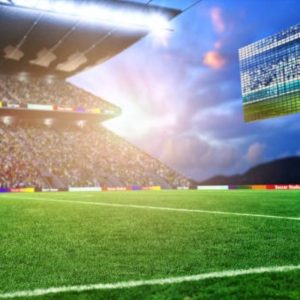
Открытые футбольные стадионы имеют совершенно другую среду просмотра.. Большая вместимость позволяет разместить зрителей 15 к 100 метров и более от основных видеостен и ленточных дисплеев.
На этих больших расстояниях, зрители не могут легко различить дополнительные детали, обеспечиваемые чрезвычайно мелким шагом пикселя. Таким образом, более широкий шаг может обеспечить достаточное качество изображения при одновременном снижении затрат на оборудование..
Это особенно важно для проектов крупных стадионов, где размеры светодиодных экранов могут быть значительными..
Какой шаг пикселя рекомендуется для крытых баскетбольных площадок?
Для большинства применений в баскетболе в помещении, рекомендуемый шаг пикселя от P2,5 до P4.
Типичное оптимальное расстояние просмотра составляет примерно 2.5 метров до 10 метры. Этот диапазон хорошо подходит для видеокубов, подвешенных по центру., доски по периметру корта, и ленточные экраны на лицевой панели.
Почему P2.5–P4 работает для крытых арен
В баскетбольных играх в закрытых помещениях участвуют быстро движущиеся игроки., повторы крупным планом, результаты в реальном времени, и частая спонсорская графика. Зрители также сидят относительно близко ко многим светодиодным дисплеям..
Дисплей P2.5 или P3.125 обеспечивает более высокую плотность пикселей для таких условий просмотра.. Он может более эффективно воспроизводить мелкие детали с близких расстояний и уменьшать видимость отдельных пиксельных структур..
Крытые площадки также работают при контролируемом искусственном освещении.. Поэтому, чрезвычайно высокая яркость на открытом воздухе обычно менее важна, чем плотность пикселей и четкость изображения..
Для площадок с интенсивным вещанием, высокая частота обновления также важна. Рекомендуемая спецификация TOPLED включает в себя 3,840Гц+ для трансляций без мерцания камеры.
Какой шаг пикселя рекомендуется для открытых футбольных стадионов?
Для открытых футбольных стадионов, а от P6 до P10 шаг пикселя в целом подходит.
Рекомендуемое расстояние просмотра составляет примерно 15 метров до 100+ метры. Это делает P6, P8, и P10, подходящие варианты для больших главных табло, дисплеи на верхней палубе, и входные стены стадиона.
Почему P6–P10 подходит для открытых стадионов
Открытые футбольные стадионы обычно имеют гораздо большую дистанцию просмотра для зрителей.. Более чем 15 метры, человеческий глаз не может легко различить дополнительные детали, предлагаемые дисплеем P2.5..
Р6, P8, or P10 дисплей спортивного стадиона на открытом воздухе Таким образом, можно обеспечить эффективную крупномасштабную визуальную производительность при меньших затратах на оборудование..
Бюджет, сэкономленный за счет выбора подходящего шага пикселя, также может быть направлен на другие важные характеристики наружного применения.. К ним относятся светодиоды высокой яркости., защищенные от атмосферных воздействий корпуса, антибликовая технология, и устойчивость к ветровым нагрузкам.
Для наружного применения, TOPLED обеспечивает высокую яркость ≥ 6500–8000 нит и поддерживает IP65/IP66 гидроизоляция для требовательных сред.
Баскетбол в помещении против. Светодиодные дисплеи для уличного футбольного стадиона
Шаг пикселя — это лишь часть спецификации светодиодного дисплея.. Покупателям B2B также следует оценить яркость, частота обновления, защита окружающей среды, расстояние просмотра, и положение установки.
Следующая матрица представляет собой краткую справку для групп закупок..
| Место проведения & Тип приложения | Рекомендуемый шаг пикселя | Минимальное расстояние просмотра | Первичная инженерная направленность | Типичное расположение экрана |
|---|---|---|---|---|
| Крытая баскетбольная площадка | П2,5–П4,0 | 2.5 м–4,0 м | Высокая плотность пикселей, высокая частота обновления (3,840Hz+ для трансляций без мерцания камеры) | Видеокубы, подвешенные по центру, доски по периметру корта, ленточные экраны на лицевой панели |
| Открытый футбольный стадион | П6.0-П10.0 | 15.0 м–100,0 м+ | Высокая яркость (≥7000 нит), IP66 гидроизоляция, устойчивость к ветровой нагрузке | Видеостены главного табло, дисплеи на верхней палубе, входные стены стадиона |
| Многоцелевая арена (Полуоткрытый) | П4,0–П5,0 | 5.0 м–12,0 м | Антибликовая технология, Широкие углы просмотра, энергоэффективность | Крытые стены трибуны, цифровые вывески вестибюля, входные площадки |
Это сравнение показывает, почему не существует универсального шага пикселя для каждого проекта стадиона.. Правильная спецификация зависит от соотношения между светодиодным экраном, зрители, окружающая среда места проведения, и предполагаемое применение.
Какие еще характеристики следует учитывать покупателям светодиодов для стадионов??
Хотя шаг пикселя является важной отправной точкой, полный светодиодный дисплей для стадиона спецификация должна учитывать несколько инженерных требований.
Яркость
Outdoor football stadiums require substantially higher brightness than indoor basketball venues. High-brightness LEDs help maintain image visibility under strong daylight and changing outdoor conditions.
Для наружного применения, the source specification recommends ≥6,500–8,000 nits, while the comparison matrix specifies ≥7000 нит as a primary engineering focus.
Частота обновления
Indoor sports displays often appear in professional broadcasts and camera recordings. A high refresh rate helps reduce visible flicker and camera-related display artifacts.
For indoor basketball applications, the recommended specification is 3,840Гц+ для трансляций без мерцания камеры.
Weatherproofing
Outdoor stadium displays must withstand rain, пыль, sunlight, and changing weather conditions.
TOPLED’s outdoor sports stadium displays use IP65/IP66 waterproof enclosures, dustproof sealing, and anti-glare mask technology. These features support reliable operation in sun, rain, or snow.
Wind Load Resistance
Large outdoor LED screens can experience significant wind exposure. Поэтому, cabinet construction and mounting design should account for the specific stadium environment.
For large football stadium installations, wind-load resistance should be considered alongside pixel pitch and brightness.
Viewing Angle
Stadium spectators are rarely positioned directly in front of an LED screen. Fans can view displays from different seating sections and angles.
Wide viewing angles therefore help maintain consistent visual performance across the venue.
Why Choose TOPLED for Modular Stadium LED Display Solutions?
TOPLED is an experienced производитель дисплеев для стадионов providing modular LED solutions for sports venues and other large public spaces.
The company’s stadium LED systems combine high-performance display technology with rugged modular cabinet designs.
Seamless High-Definition Visuals
TOPLED indoor and outdoor display solutions support real-time broadcast streaming, zero-latency multi-angle replays, and dynamic multi-zone advertising.
These capabilities allow stadium operators to combine sports content with sponsorship and promotional messaging.
Weatherproof and Durable Design
Outdoor sports stadium displays are designed for demanding environmental conditions.
ТОП светодиодные опоры IP65/IP66 waterproof enclosures, dustproof sealing, and anti-glare mask technology. These features help protect LED displays from sun, rain, and snow.
Lightweight and Serviceable Architecture
TOPLED modular cabinets are designed to remain lightweight while providing robust structural performance.
This architecture can simplify rigging and help reduce mounting structure costs. Front- and rear-service access also makes routine maintenance faster and more cost-effective.
Custom Stadium LED Display Wholesale
Every stadium has different dimensions, seating arrangements, viewing distances, and sponsorship requirements.
TOPLED provides Пользовательский светодиодный дисплей стадиона оптом solutions that allow venue owners to specify screen dimensions, cabinet materials, уровни яркости, and resolution configurations.
This approach helps procurement teams align the LED system with the actual stadium layout instead of purchasing an unnecessarily high specification.
How to Select the Right Stadium LED Display
A practical procurement process should begin with the viewing distance rather than the pixel pitch alone.
Первый, identify the closest and farthest spectator positions. Then determine where the LED screen will be installed and how it will be used.
1. For indoor basketball courts, P2.5–P4 is recommended for close viewing and detailed sports content.
2. Для открытых футбольных стадионов, P6–P10 is more suitable for long viewing distances and large-scale displays.
3. For semi-outdoor multipurpose arenas, P4–P5 provides a practical balance between resolution, расстояние просмотра, Яркость, и энергоэффективность.
After selecting the pixel pitch, procurement teams should evaluate brightness, частота обновления, weatherproofing, углы обзора, устойчивость к ветровой нагрузке, cabinet design, и доступ для обслуживания.
This approach helps prevent over-specification while ensuring that the final LED display meets the venue’s operational requirements.
Stadium LED Display Procurement: Balancing Performance and ROI
The right pixel pitch should provide sufficient visual clarity without unnecessarily increasing project costs.
For an indoor basketball arena, investing in a finer pitch can improve close-range viewing and broadcast quality.
For a large outdoor football stadium, a wider pixel pitch can provide an effective visual experience at much longer distances. The remaining budget can then support higher brightness, stronger weatherproofing, anti-glare features, and structural requirements.
This makes pixel pitch selection an important part of overall stadium LED display ROI.
The goal is not to choose the smallest pixel pitch available. The goal is to choose the specification that best matches the venue’s geometry and audience.
Elevate Your Venue Experience with TOPLED
TOPLED manufactures high-performance Стадинные светодиодные экраны, center-hung video cubes, perimeter displays, and architectural LED walls for sports arenas, концерты, and public venues worldwide.
The company provides turnkey customization for pixel pitches, high-refresh driver ICs, custom cabinet sizes, and energy-efficient power configurations.
TOPLED also provides full B2B project support. Services can cover initial viewing-distance analysis, CAD mounting designs, factory testing, and global shipping support.
For stadium operators, architects, and commercial procurement teams, the right LED solution starts with understanding the venue’s actual viewing conditions.
Choose the pixel pitch according to viewing distance, then optimize brightness, weatherproofing, частота обновления, and cabinet design around the application.
Contact TOPLED’s engineering team to request technical datasheets and wholesale project quotes for your stadium LED display project.